
Grinding & Polishing Services

Concrete grinding and polishing are proven ways to repair, level and beautify concrete floors in homes, warehouses, garages, or commercial facilities. This guide covers everything you need to know about concrete floor grinding, polishing, trip hazard removal and surface prep. We explain the different methods (grinding vs. milling vs. polishing), ADA compliance considerations, cost factors, and when to use each approach.
For service details, see our Slab Grinding and Polishing pages, or request a quote to discuss your floor project.





Grinding vs. Polishing vs. Scarifying: What’s the Difference?
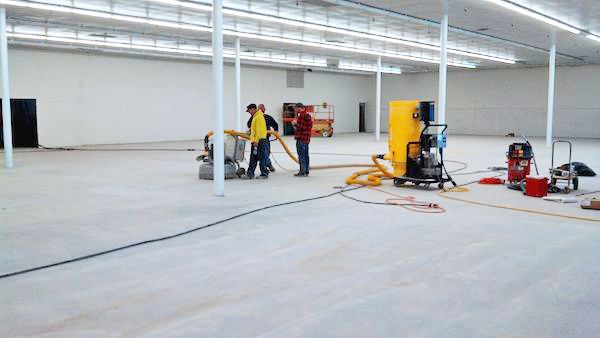
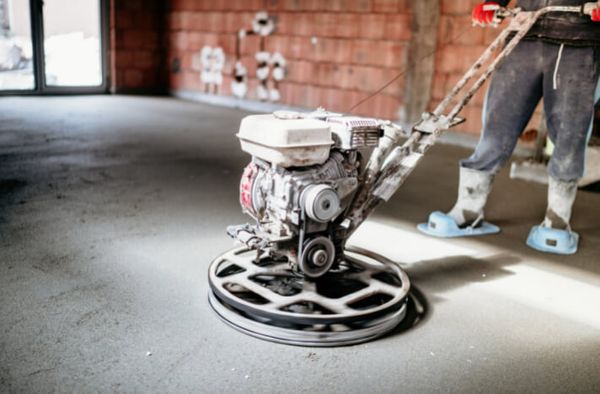
Our Ohio Concrete team preparing a floor grinder for leveling a slab. Using diamond grinding equipment and HEPA vacuums, we can eliminate trip hazards (uneven joints or spalled areas) and expose aggregate if desired. This chemical-free, fume-free process leaves a clean, profiled surface ready for coating or finishing.
Concrete Grinding (Surface Grinding): This uses large diamond grinding wheels on floor machines to smooth and level concrete. Walk-behind grinders (or hand grinders for edges) make multiple passes over the floor, shaving down high spots, smoothing uneven joints and eliminating small surface defects. As a result, “diamond tools are an ideal way to smooth out bumps and trip-hazards in concrete floors”. Grinding is often the least expensive way to eliminate floor elevation differences and prepare an existing slab for new flooring or coating.
Shaving/Milling: Grinding machines can be fitted with “shaver” or milling heads, which remove a uniform layer of concrete in each pass. This is useful when you need to lower the floor height or open aggregate texture. Our milling machines use stacked saw blades for controlled removal, typically about 1/8″ per pass. Scarifying is a related process: a rotary drum with carbide cutters “chips” the surface like mini jackhammers. Scarifying is less aggressive than milling, leaving a rougher profile – ideal for texturing slippery surfaces or removing raised joints and trip hazards. In short, milling/grinding removes smooth layers of concrete, while scarifying produces an abrasive texture.
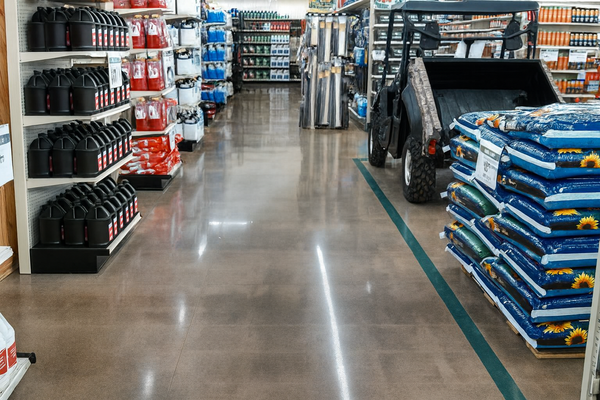
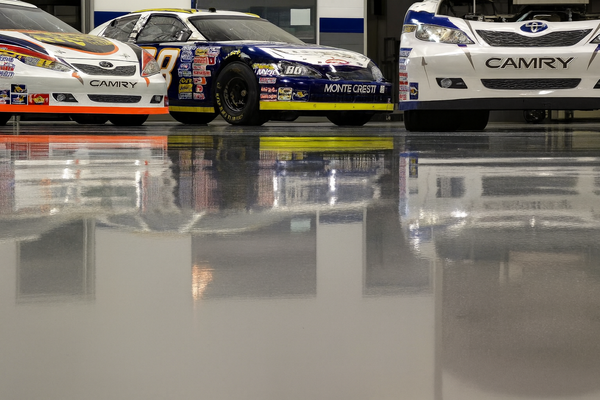
Concrete Polishing: After grinding (or starting with a smooth concrete floor), polishing is the next step to achieve a high-gloss, low-maintenance finish. Polishing is a multi-step process using increasingly fine diamond pads, followed by densifiers and burnishing. As Ohio Concrete’s guide explains, polishing “uses diamonds to ‘sand’ the concrete smooth, similar to the sanding of wood”. The final result is a shiny, reflective surface. Polished concrete is known for its durability and ease of upkeep – most warehouses and retail stores use it because it “reflects up to 30% more light” and stays clean with minimal effort. Importantly, properly polished concrete floors are slip-resistant: they can meet OSHA and ADA requirements for safe flooring.
Trip Hazards, Leveling & ADA Compliance
One of the most common uses of floor grinding is trip hazard removal. Adjacent concrete slabs or tiles often sit at slightly different heights, creating a dangerous uneven floor. By grinding down the high side, we eliminate that hazard. For example, OCSD’s grinders can address “uneven joints creating possible trip hazard”, remove spalled concrete and even strip old coatings or adhesives. The result is a smooth, continuous floor surface.
For public spaces and workplaces, flooring must meet ADA and safety standards. Under the ADA, floors are required to be firm, stable and slip-resistant. A properly ground and polished concrete floor easily meets those criteria. In fact, polished concrete often exceeds OSHA slip-resistance standards because the micro-texture of the surface maintains high friction, even when wet. We can even use non-slip grinding pads or add grit as needed for extra traction. In practice, polished concrete with densifiers will have a Dynamic Coefficient of Friction (DCOF) around 0.42+, which is acceptable for ADA compliance. The key is that concrete grinding/polishing can both level trip hazards and result in a safe, ADA-friendly finish.
Surface Preparation & Epoxy Flooring
If you’re installing coatings (epoxy, urethane, paint, etc.), proper surface prep is critical. Diamond grinding is a preferred method to profile the slab. It aggressively removes contaminants (paint, glue, thinset), opens up the surface, and achieves the right Concrete Surface Profile (CSP) for bonding. As one expert notes, prep steps include “mechanical grinding or shot blasting: profiling the surface for better adhesion.”. OCSD’s grinders will clean the floor, grind flat spots, fill cracks/joints, and leave the ideal roughness for your coating. By budgeting 15–25% of the floor’s cost for prep, you prevent failures like peeling or delamination.
Chemical Adhesives & Coating Removal: Floor grinding easily removes old adhesives, mastics, coatings or paint. This means no leftover glue under new epoxy or tile. We use dust-containment and vacuums so that grindings are collected, not left on the floor. After grinding, the surface is cleaned and ready for epoxy or other overlays. (In some cases, after grinding we apply a densifier/sealer to lock in the finish and prevent dusting.)
Residential vs. Commercial & Industrial Applications
Residential Flooring: Homeowners choose grinding/polishing for garages, basements and patios. It yields a sleek, decorative finish – you can even add stains or dyes for color. In a basement or living area, polished concrete is very low-maintenance (no waxing needed). It’s also healthier: polished concrete eliminates the “dusting” that unpolished floors develop over time, so you won’t have fine particles coating everything. With proper sealing, the floor resists oil stains and water.
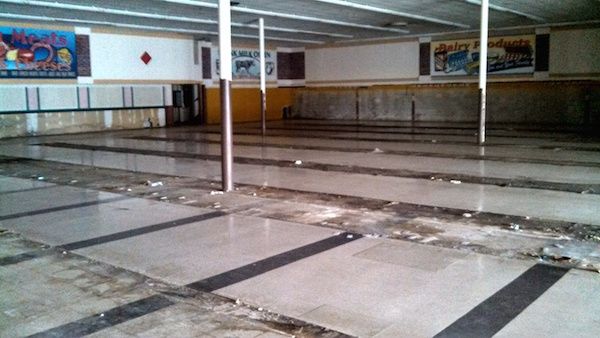
Industrial/Commercial Flooring: In warehouses, factories and retail stores, speed and durability matter. Polished concrete is popular because it can withstand heavy equipment, turn forklifts, and far outlast vinyl or tile. It lowers long-term costs: aside from a higher initial cost (see below), it never needs replacement for decades. The extra light reflectivity (up to 30% more) can reduce lighting costs. For very high-traffic or spill-prone areas, we might add a non-slip polish or use sealers that meet chemical resistance specs. For example, we performed a grind-and-burnish prep for epoxy on a loading dock floor by first using a milling head to lower the slab, then applying a durable epoxy coating on a smooth base.
Cost Factors & Pricing Breakdown
Typical Costs: Concrete grinding and polishing costs vary widely. Basic grind-and-seal (coarse grinding + sealing) might run on the low end of $2–$5 per sq. ft.. Mid-range polishing (multiple grits, medium gloss) is about $4–$8 per sq. ft.. Premium polished floors (high gloss, decorative elements, toppings) can exceed $10–$18 per sq. ft.. Factors influencing cost include slab size, condition, finish level and any stains or logos.
Preparation Costs: A significant portion of the cost is in prep work. Expect to spend roughly 15–25% of the project on preparation. For example, our partners note that grinding alone is roughly $0.75–$1.50 per sq. ft. in a typical job. Scarifying or shotblasting runs about $1–$3 per sq. ft. each. Removing old coatings can add another $1–$3 per sq. ft.. In total, you may budget $1.50–$5.00 per sq. ft. for surface prep. In one example, grinding and prep on a 5,000 sq. ft. warehouse ranged from ~$7,500 to $25,000 depending on floor condition.
Breakdown: Here’s an illustrative breakdown of a polished concrete project:
Surface Preparation (15–25% of total cost): Includes demo of coatings/carpet, crack repair, and initial grinding to level (15–25% of budget).
Grinding/Polishing (40–60%): Multiple passes with diamond tools to achieve the final finish. Each polishing step (from coarse grinding up to burnishing) adds time and cost.
Decorative Elements (0–30%): Optional stains, dyes or logos add to cost ($2–$8 per sq. ft. or per linear foot for cuts).
Sealing and Burnishing (10–15%): Final sealers and cleanup to lock in durability.
While polished concrete seems premium, it often outperforms other floor options over time. A $10/ft² polished floor lasts 30+ years with minimal upkeep, compared to vinyl or tile replacements every 10–15 years. If you’re considering options, factor in the lifecycle cost savings of concrete.
Q: What is floor grinding vs polishing?
A: Floor grinding uses diamond abrasive discs to smooth and level the concrete surface (removing irregularities and coatings). Polishing is the final finishing process – after grinding, we use finer grits (and chemical hardeners) to create a glossy, reflective finish. One analogy is that grinding is like sanding rough wood, and polishing is like buffing it to shine.
Q: How is polishing done, and is it wet or dry?
A: Polishing is done dry with industrial vacuums to collect dust. We start with a coarse diamond pad (to remove major imperfections), apply a densifier (which hardens the concrete), then move up through finer grit pads. Each step is vacuumed clean. The process is chemical-free and fume-free. Final burnishing makes the floor smooth and shiny.
Q: Is polished concrete slippery?
A: Polished concrete has a higher friction coefficient than ordinary concrete. Properly polished floors meet or exceed slip resistance standards (both OSHA and ADA require slip resistance). In fact, the very smooth appearance is accompanied by a tough, textured surface at the microscopic level, providing grip even when wet. We can also use non-slip additives during polishing for extra traction.
Q: Can you grind a concrete floor for an epoxy coating?
A: Absolutely. Grinding is often the first step in epoxy floor prep. It creates a profile so the epoxy mechanically locks in. According to industry guides, prepping (grinding, scarifying, etc.) is essential before coatings. If skipped, coatings can fail. We ensure the floor is clean, roughened and flat, then epoxy is applied to a properly prepared concrete.
Q: How much does concrete polishing cost?
A: As noted, polished concrete can range from about $3 to $18 per sq. ft. depending on the finish. Basic polished concrete (no added color or logos) will be on the lower end. Higher gloss or decorative work increases cost. Grinding alone (for a simple smooth finish) is cheaper. We provide free estimates based on your square footage and goals.
Q: How do I know if grinding/polishing is right for my floor?
A: Grinding/polishing is versatile. It’s great if your floor is uneven, has spalling or needs a durable finish. It’s also used when you want a concrete floor that’s easy to clean and looks modern. If you want a thin floor leveling solution or are preparing for a new coating, grinding is the go-to method. For finishing, polished concrete is ideal if you want minimal maintenance and a long-lasting surface. Contact us to discuss your specific needs and we’ll recommend the best approach.
Get Started with OCSD Grinding & Polishing
Whether you have a residential garage, a commercial facility, or an industrial plant, Ohio Concrete Sawing & Drilling has the experience and equipment to handle your flooring needs. Our grinders and polishers use HEPA vacuum systems, leaving a clean, dry surface behind. We work with contractors and facility managers to achieve the desired flatness (FF/FL specifications).
Ready to transform your concrete floors? Visit our Concrete Polishing or Slab Grinding service pages to learn more about each process. For a personalized proposal, request a free quote or call us at our local office. OCSD provides transparent pricing and expert guidance – from commercial warehouses to home basements, we help you maximize your floor’s performance and appearance.
Contact us today for a no-obligation consultation or estimate on your concrete grinding and polishing project. Let Ohio Concrete’s skilled team show you the difference expert floor prep and polishing can make.